PerfectVector
Loved byDesigners
Trusted byMakers
VISUAL SUPPORTS

Turn one visual-support picture into a reusable SVG.

or try by clicking an image

No credit cardUnlimited vectorizing & previewSVG ready in seconds
REPRESENTATIVE PREPARATION SCENARIO, NOT A TESTIMONIAL

THE CUE LEAVES THE SCREEN

One familiar picture is suddenly needed in four physical formats.

A picture that began in one digital file now belongs on a desk strip, a first/then board, a wall schedule, and a portable card. Rebuilding or exporting it again for every size turns a small preparation task into repetitive layout work.

Inspect real conversions
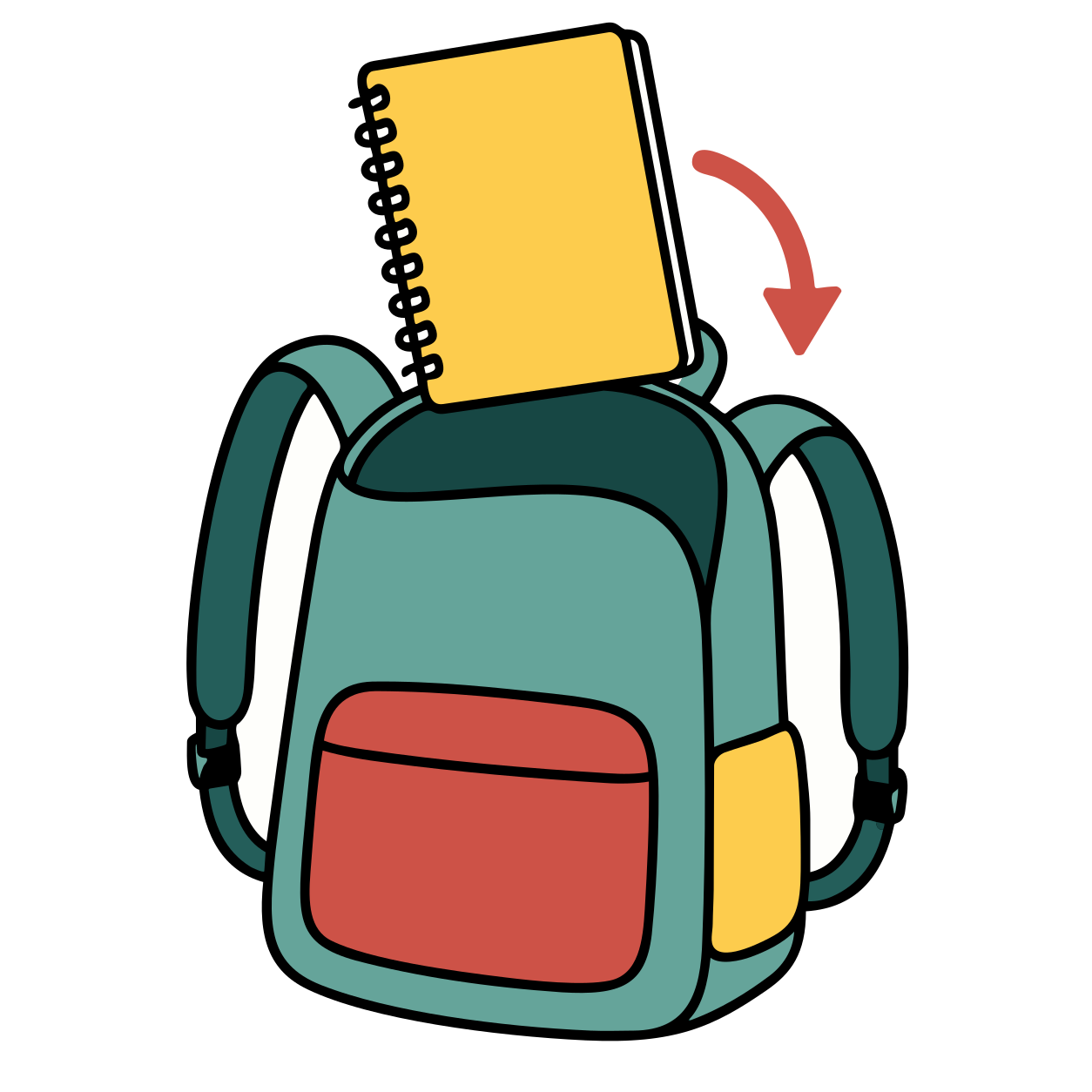
Original raster cue picture of a backpack, notebook, and pencil
AVAILABLE ARTWORKOne flattened raster picture
01Desk stripA compact cue beside the current task
02First/then boardThe same picture inside a two-step layout
03Wall scheduleA larger version visible from farther away
04Portable cardA small copy for a ring, lanyard, or folder
PRACTICE AND FORMAT SOURCES

The picture can travel. The decisions around it stay individual.

ASHA describes low-tech AAC materials that include pictures, communication boards, books, and visual schedules. It also emphasizes that symbol size, number, organization, access, and cultural relevance are individualized. NCPMI publishes visual schedules, routine cards, and first/then boards as distinct support formats.

These sources establish common formats and the need for individualized decisions. They do not test, evaluate, or endorse PerfectVector, and this page does not offer clinical or educational advice.

REAL PERFECTVECTOR CONVERSIONS

Judge the picture by the shapes that communicate its meaning.

Both examples were created under our team's direction and processed through the protected PerfectVector workflow. One depends on clear hand and water shapes; the other uses several familiar objects inside a compact scene.
Evidence set2 reviewed pairs
ACTION CUE

The action stays legible without a crowded path set.

The hands, faucet, water, basin, soap, and outline remain visibly separated. The complete illustration stays inside the frame so its silhouette can be checked before download.

Original rasterPNG

Original raster cue picture of hands being washed under a faucet
Team-created 1254 × 1254 raster source
PerfectVector SVGSVG
PerfectVector SVG result of the hand-washing cue picture
Visible artwork reconstructed as SVG paths
18 SVG paths · 5 fill colors · 0 embedded images
ROUTINE CUE

Several objects remain easy to distinguish.

The lunch box, apple, drink, crackers, and plate use broad color regions and generous spacing. That makes the visible result straightforward to compare with the source.

Original rasterPNG
Original raster cue picture of a lunch box, apple, drink, crackers, and plate
Team-created 1254 × 1254 raster source
PerfectVector SVGSVG
PerfectVector SVG result of the snack-time cue picture
Routine scene reconstructed as path-based SVG
14 SVG paths · 6 fill colors · 0 embedded images

These pairs show the exact source framing and path-based production SVGs. They do not demonstrate comprehension, clinical suitability, automatic symbol selection, recovered semantic layers, or the same structural complexity for every image. Source size, contours, shading, compression, and intended use all matter. For display, we removed only the verified plain-background shape from each downloaded SVG; no artwork path was manually repaired.

BUILT BY AI RESEARCHERS

An in-house AI model that turns pixels into editable vectors.

PerfectVector AI Lab

The research team continuously advancing PerfectVector's in-house vectorization engine

PerfectVector is developed in-house by Rastrix Inc. Its researchers bring 10+ years of combined research and industry experience in deep learning and computer vision.

Our researchers hold every vector to a high standard. They design new methods, review results, and continuously improve how PerfectVector reconstructs shapes, edges, colors, and fine detail.

AI research
deep learning and computer vision
10+ years
research and industry experience
In-house
core vectorization models and algorithms
Quality-first
continuous model and engine improvement

ONE REVIEWED MASTER

Reuse the picture. Keep the support editable.

Once the visible artwork looks right, the same complete SVG can move into several layouts. Each destination still keeps its own label, order, spacing, and presentation choices.
REVIEWED SVG MASTERWash hands
PerfectVector SVG result of the hand-washing cue picture
18 paths · 5 fills · no embedded image
Desk strip

Place the complete picture beside other cues at a compact size.

First/then board

Reuse it inside a two-part sequence without redrawing the cue.

Wall schedule

Scale the same artwork for a larger shared display.

Portable card

Fit the reviewed picture into a small card or keychain layout.

The four mock layouts intentionally repeat the same complete SVG. They demonstrate placement and scaling, not automatic layout, symbol selection, or suitability for a particular learner.

ARTWORK IS ONE LAYER OF THE SUPPORT

PerfectVector handles the visible picture. Your team owns the decisions around it.

A scalable picture can reduce repetitive asset work. It cannot decide how a support should be labeled, organized, introduced, or used.
SVG ARTWORK MASTER

Shapes, colors, and scalable picture boundaries

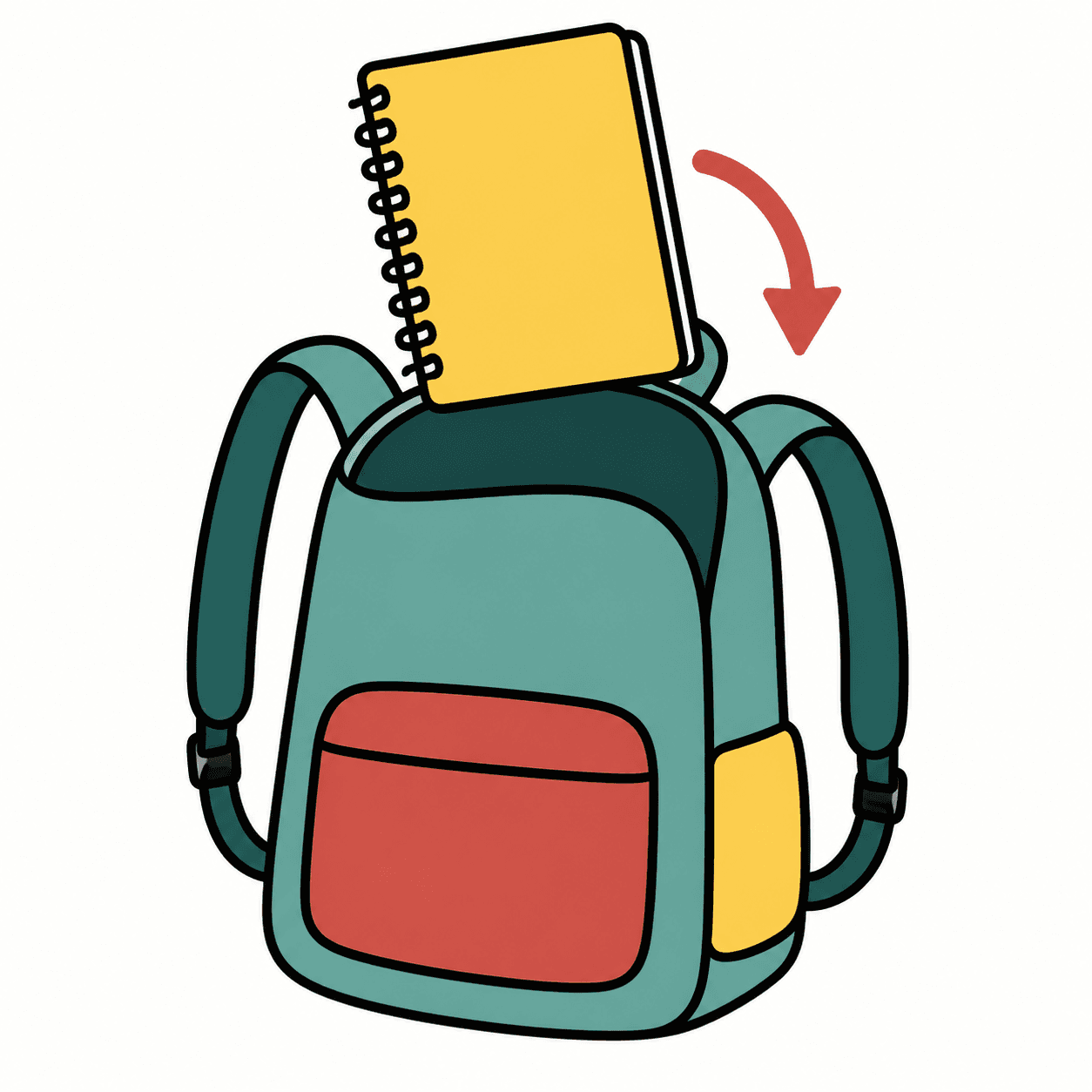
Review the path-based artwork in a vector editor when needed, then place the complete picture into the support you are building.

PerfectVector SVG result of a backpack, notebook, and pencil cue picture
PRACTITIONER AND TEAM DECISIONS

Meaning, access, and presentation remain live.

Keep the parts that may change for a person or setting editable in your normal authoring and review workflow.

  1. Label wording and type treatment
  2. Language and culturally relevant representation
  3. Sequence, grouping, and number of symbols
  4. Picture size, spacing, contrast, and viewing distance
  5. Placement, access method, instruction, and ongoing review

PerfectVector does not assess communication or learning needs, prescribe AAC, select vocabulary, verify symbol meaning, or replace review by the learner, family, educator, speech-language pathologist, or other qualified team members.

CHOOSE THE RIGHT SOURCE AND JOB

Some visual-support artwork belongs in SVG. Some does not.

The protected preview lets you inspect the actual conversion before you unlock a file. Use it to judge the visible artwork, then make suitability decisions in the workflow that owns the support.

01
STRONG CANDIDATE

Flat color, clear outlines, and generous details

Large objects, familiar silhouettes, separated color regions, and uncluttered backgrounds are straightforward to compare.

02
REVIEW CLOSELY

Soft shading and compressed edges

Small highlights, fuzzy boundaries, and tonal changes can create extra paths or fragments even when the overall render looks close.

03
KEEP RASTER

Photos and person-specific visual detail

When recognition depends on photographic realism or a particular person, place, or object, a sufficiently large raster source is often more faithful.

04
KEEP JUDGMENT HUMAN

Symbol choice and individualized presentation

Format conversion cannot decide which picture, label, size, arrangement, or access method is appropriate for a learner or communicator.

05
CHECK PERMISSION

Commercial symbol libraries and curriculum artwork

Conversion does not grant permission to adapt, share, redistribute, or publish artwork. Follow the source owner's current license.

PerfectVector reconstructs visible pixels as paths. It cannot restore original layers, hidden objects, font files, meaning, or details that are absent from the source.

FROM CUE PICTURE TO SVG

Prepare reusable visual-support artwork in three reviewable steps.

  1. 1

    Upload the clearest permitted picture

    Start with the largest PNG, JPG, or WebP you own or have permission to adapt. Bold outlines, broad color regions, familiar silhouettes, and generous margins are easier to inspect than thumbnails or compressed screenshots.

  2. 2

    Review the real vector preview

    Check the object silhouette, hands, facial features, narrow gaps, and color boundaries. Look for fragments around soft edges or compression noise before you unlock the SVG.

  3. 3

    Place the artwork into each support

    Reuse the reviewed SVG in the schedule, board, strip, card, or handout you are preparing. Keep the label and every individualized layout decision live in your authoring tool.

Before you pick a plan

You're in good company.

I'd tried everything and been let down every time — I'd given up, figuring today's tech just couldn't do this. And you actually built it. If this is real, it's genuinely incredible.
sam••••via Threads
It converts at even better quality than I expected — it preserves the character of the original better than anything else I've tried.
imbee••••via Threads
PerfectVector is impressively fast, and the output quality is already very good. With a bit more refinement it could easily compete with the leading tools.
InPixelSt••••design studiovia email
Way more detailed than I expected. Opening Illustrator to convert every single time was such a chore — bookmarked.
bazzing••••Illustrator uservia Threads
Tried it — it's accurate. Simple images actually expose detail differences more than complex ones do, and this nails them.
good9••••via Threads
SIMPLE, FAIR PRICING

Start free. Upgrade when you need more.

Vectorizing and preview are always free and unlimited — you only spend a credit when you download a finished file.

Free

Try it out, casual use

Free

5 credits when you sign up. Expires in 30 days.

  • 5 credits when you sign up(Expires in 30 days)
  • Unlimited vectorizing & preview
  • Simplify & merge colors
  • Clean, optimized SVG output
  • SVG, PNG, JPG, PDF, EPS, DXF export

No credit card required

Recommended

Light

For regular design work

$12/month

100 credits a month · about $0.12 per download

  • Everything in Free, plus:
  • 100 download credits every month
  • Credits refresh monthly
  • Priority processing
  • Priority support
  • Early access to new features

Pro

For power users & studios

$25/month

500 credits a month · about $0.05 per download

  • Everything in Light, plus:
  • 5x more usage than Light
  • 500 download credits every month
  • Credits refresh monthly
  • Highest monthly volume
  • Built for high-volume professional use

Need just a few more? Buy 10 credits for $5. · one-time · Never expires

1 credit = 1 download. Re-downloading a file you already saved is always free. Cancel anytime.

FREQUENTLY ASKED QUESTIONS

Questions before you convert?

What visual-support pictures usually vectorize well?+
Flat-color pictures, simple object scenes, bold outlines, large facial or hand details, and clearly separated color regions are strong candidates. Use the largest genuine source you have rather than an enlarged thumbnail.
Can I reuse one SVG on a visual schedule and a first/then board?+
Yes. Once the visible artwork looks right, you can place the same SVG into different layouts. Keep each label, order, size, spacing, and presentation decision editable in the document or design file.
Does PerfectVector create an AAC system or choose symbols for a learner?+
No. PerfectVector converts suitable visible artwork into SVG paths. It does not assess communication needs, prescribe AAC, select vocabulary, determine symbol meaning, or replace individualized decisions by a qualified team.
Will the SVG include editable text labels?+
Not automatically. Keep labels as live text in the application that owns the visual support. This makes wording, language, type size, and future revisions easier to manage.
Can PerfectVector restore the original layers or source file?+
No. Raster-to-vector conversion works from visible pixels. It cannot recover hidden objects, original layer names, font files, or details that were not present in the uploaded image.
Should I vectorize photographs used as visual supports?+
Usually not when photographic realism or person-specific detail is important. A sufficiently large raster photo is often the more faithful format. Use SVG for artwork whose shapes remain useful when reconstructed as paths.
Can vectorization repair a very small or blurry picture card?+
It can reconstruct boundaries that remain visible, but it cannot reliably invent fingers, facial features, object details, or lettering that the source reduced to only a few pixels. Start with the highest-resolution permitted source available.
Can I convert commercial symbol-library artwork?+
Only when the license allows the adaptation and use you intend. Conversion does not grant copyright, trademark, commercial-use, sharing, or redistribution rights. Check the current terms from the symbol or curriculum provider.
How much does visual-support vectorization cost?+
Vectorizing and preview are always free and unlimited — you only spend a credit when you download a finished file.

One reviewed picture.
Ready for every place it belongs.

Upload the clearest picture you are allowed to adapt, inspect the real SVG preview, and unlock it only when the visible result fits your visual-support materials.

Vectorize and preview

Vectorizing and protected preview are free and unlimited. Unlock one finished download with one credit, then download that unlocked result again without another charge.